
How to Choose the Best Online Casino Bitcoin Options in Canada: A 2026 Guide to Safe Crypto Gambling
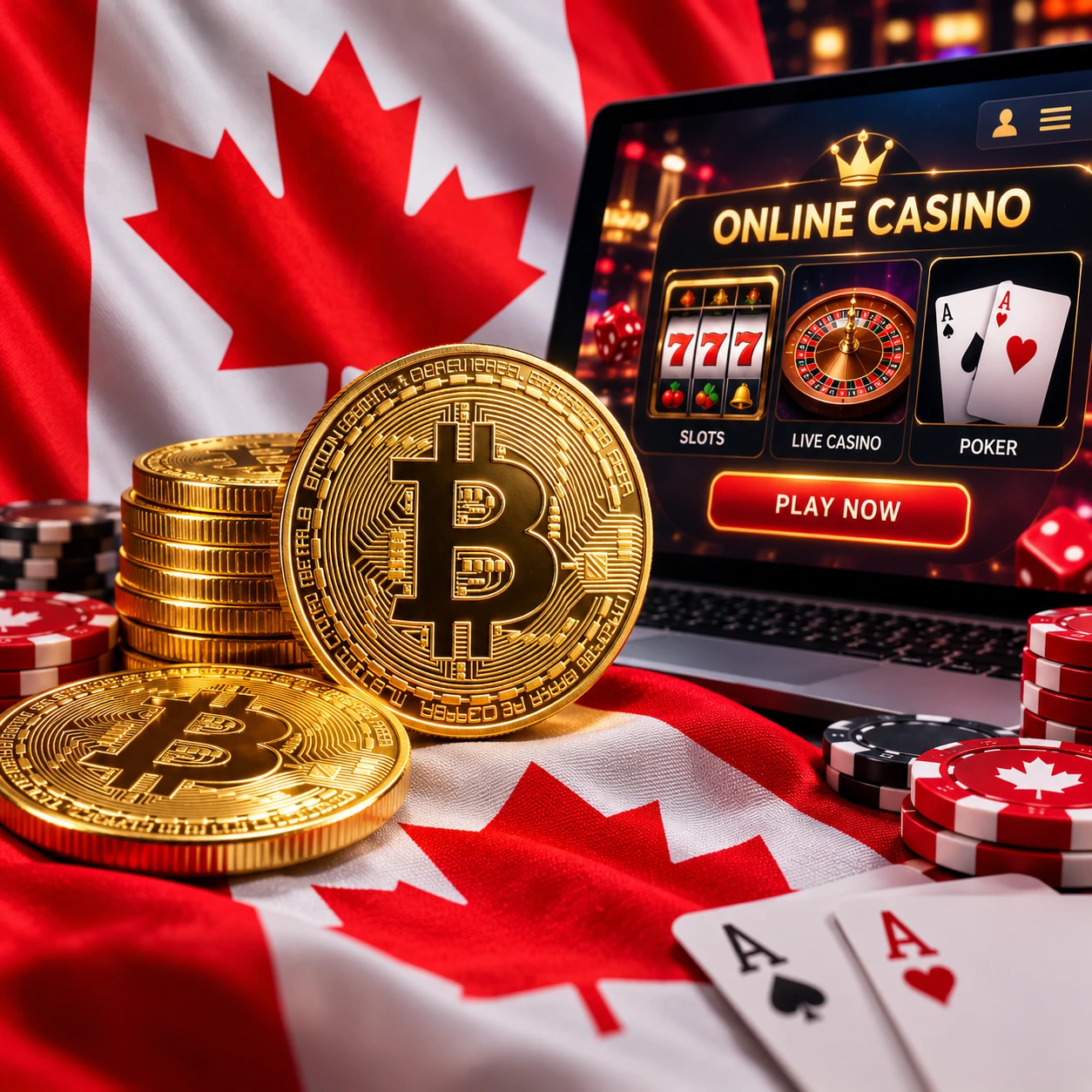
I've been following the evolution of online gambling in Canada for years, and 2026 has brought some of the most exciting developments yet. The intersection of cryptocurrency and casino gaming has transformed how Canadians approach online gambling, offering unprecedented freedom and security. As someone who's navigated this landscape extensively, I can tell you that choosing the right Bitcoin casino requires careful consideration and knowledge of what makes these platforms truly trustworthy.
The crypto gambling revolution isn't just about trendy technology—it's about real advantages that matter to players like you and me. From lightning-fast transactions to enhanced privacy protections, Bitcoin casinos have addressed many of the frustrations that plagued traditional online gambling platforms. But with this explosion of options comes the challenge of separating the exceptional from the mediocre, and more importantly, the legitimate from the potentially dangerous.
Why Bitcoin Casinos Are Gaining Popularity in Canada in 2026
The Canadian gambling landscape has undergone a remarkable transformation over the past few years. When I started exploring Bitcoin casinos back in 2023, they were still considered niche and somewhat experimental. Fast forward to 2026, and they've become a mainstream choice for thousands of Canadian players who value their financial privacy and transaction efficiency.
The regulatory environment in Canada has evolved to become more accommodating toward cryptocurrency transactions, even as traditional gambling regulations remain provincial matters. While Bitcoin casinos typically operate under international licenses, Canadian players have found themselves in a unique position where they can legally access these platforms without violating federal law. The grey area that once existed has become clearer, giving players confidence to explore crypto gambling options.
One of the most compelling reasons I've seen players switch to Bitcoin casinos is the anonymity factor. Traditional online casinos require extensive personal information—banking details, credit card numbers, proof of address, and more. Bitcoin transactions, by contrast, allow you to maintain a level of privacy that simply isn't possible with conventional payment methods. You're not handing over sensitive financial information to multiple third parties, which in today's world of data breaches and identity theft, is increasingly valuable.
Transaction speed has also been a game-changer. I remember waiting five to seven business days for withdrawals from traditional online casinos—an eternity when you've just hit a big win. Bitcoin transactions typically process within minutes to a few hours, depending on network congestion. This means you have control over your funds almost immediately, rather than being at the mercy of banking schedules and intermediary processing times.
Key Factors to Consider When Choosing an Online Casino Bitcoin Platform
Navigating the world of Bitcoin casinos requires a discerning eye. I've learned through experience that not all platforms are created equal, and some are frankly more interested in taking your money than providing a fair gaming experience. When evaluating potential online casino bitcoin options, I always start with a comprehensive checklist that covers the essential security, fairness, and quality indicators.
The first thing I examine is the casino's overall reputation within the crypto gambling community. Forums, review sites, and social media discussions can reveal patterns of behavior—both positive and negative—that official websites will never disclose. I've avoided several problematic casinos simply by spending twenty minutes reading what actual players had to say about their experiences.
Licensing and Security Credentials
Licensing is where many players make their first critical mistake. I cannot stress enough how important it is to verify that a Bitcoin casino operates under a legitimate gambling license. The most reputable jurisdictions for online casino licensing include Curacao, Malta Gaming Authority, and the UK Gambling Commission. These regulatory bodies enforce standards for fair play, financial security, and dispute resolution.
When I evaluate a casino's licensing, I don't just take their word for it. I verify the license number directly with the issuing authority. Legitimate casinos display their license information prominently, usually in the footer of their website. If you have to hunt for this information or if the license details seem vague, that's a significant red flag.
Security credentials extend beyond licensing. I always look for SSL encryption—that little padlock icon in your browser's address bar. This ensures that your data is encrypted during transmission. Two-factor authentication (2FA) is another feature I consider mandatory for any serious Bitcoin casino. It adds an extra layer of security to your account, making it exponentially harder for unauthorized users to access your funds even if they somehow obtain your password.
Cold storage for player funds is another security feature that distinguishes professional operations from amateur ones. Casinos that store the majority of player Bitcoin in offline cold wallets protect against hacking attempts that target online hot wallets. When I find a casino that's transparent about their security practices and employs cold storage, it immediately earns points in my evaluation.
Game Selection and Software Quality
A Bitcoin casino's game library tells you a lot about the platform's quality and legitimacy. Reputable software providers like Evolution Gaming, Pragmatic Play, NetEnt, and Microgaming don't license their games to just anyone. These companies have reputations to protect, so they conduct due diligence before partnering with casinos. When I see games from established providers, it's a strong indicator that the casino meets certain operational standards.
I always look for variety in game selection. A quality Bitcoin casino should offer hundreds of slots from multiple providers, along with table games like blackjack, roulette, baccarat, and poker. Live dealer games have become increasingly important to me—there's something about watching a real person deal cards via high-definition video stream that adds authenticity to the online gambling experience.
Provably fair games are a unique feature of crypto casinos that I find particularly compelling. These games use blockchain technology and cryptographic algorithms to allow players to verify the fairness of each outcome. You're not just trusting that the casino is being honest—you can actually verify it mathematically. Not every game at a Bitcoin casino needs to be provably fair, but the presence of these games demonstrates a commitment to transparency.
Understanding Bitcoin Transaction Benefits for Canadian Gamblers
The practical advantages of using Bitcoin for online gambling have fundamentally changed my approach to casino gaming. Traditional payment methods come with frustrations that I'd grown accustomed to—until I experienced the alternative. The difference is so substantial that I now find it difficult to justify using conventional banking methods for online gambling when crypto options are available.
Transaction speed is the most immediately noticeable benefit. I can deposit Bitcoin into my casino account and see it reflected in my balance within ten to thirty minutes on average. Compare this to bank transfers that can take three to five business days, or even credit card deposits that sometimes require additional verification steps. When inspiration strikes and I want to play, I don't want to wait days for my deposit to clear.
Withdrawals showcase the speed advantage even more dramatically. I've withdrawn winnings from Bitcoin casinos and had the funds in my wallet within two hours. Traditional online casinos often impose waiting periods—sometimes called 'pending periods'—of 24 to 48 hours before they even begin processing your withdrawal. Then add the actual transfer time, and you're looking at a week or more. With Bitcoin, once the casino processes your withdrawal, the blockchain handles the rest quickly and efficiently.
Fee structures favor Bitcoin transactions as well. Traditional payment methods involve multiple intermediaries—your bank, the payment processor, sometimes currency conversion services—and each one takes a cut. Bitcoin transactions typically involve only a network fee, which in 2026 has become quite reasonable thanks to technological improvements like the Lightning Network. I've saved hundreds of dollars in fees over the past year simply by using Bitcoin instead of credit cards or bank transfers.
Privacy is another dimension where Bitcoin excels. My bank doesn't need to know how I spend my entertainment budget, and I prefer not to have 'ONLINE CASINO' appearing on my bank statements. Bitcoin transactions are pseudonymous—they're recorded on the blockchain but not directly tied to your real-world identity unless you choose to reveal that connection. For Canadians who value financial privacy, this is a compelling advantage.
How to Set Up and Use Bitcoin for Online Casino Gaming
Getting started with Bitcoin for casino gaming is more straightforward than many people assume. I remember feeling intimidated by the technical aspects when I first started, but the process has become remarkably user-friendly in 2026. Let me walk you through the steps I take when helping friends get set up with Bitcoin for gambling.
First, you need a Bitcoin wallet—think of it as your digital bank account for cryptocurrency. I recommend starting with a reputable wallet provider like Exodus, Electrum, or a hardware wallet like Ledger if you plan to hold significant amounts. The wallet generates a unique address for receiving Bitcoin and allows you to send Bitcoin to others, including casino platforms. Security is paramount here: write down your recovery phrase (also called a seed phrase) and store it somewhere safe. If you lose access to your wallet without this phrase, your Bitcoin is gone forever—there's no customer service department that can reset your password.
Next, you need to acquire Bitcoin. Canadian players have excellent options for purchasing crypto through domestic exchanges. I've used Wealthsimple Crypto, Newton, and Bitbuy—all of which are Canadian companies that comply with our financial regulations. The process typically involves creating an account, verifying your identity (ironically, you need to provide personal information to buy Bitcoin, even though you won't need it to gamble with it), and linking a funding source like your bank account or credit card.
Once you've purchased Bitcoin, transfer it from the exchange to your personal wallet. This step is crucial—exchanges can be hacked or experience technical issues, and keeping your Bitcoin on an exchange means you don't truly control it. The transfer is simple: copy your wallet's receiving address, paste it into the exchange's withdrawal interface, specify the amount, and confirm the transaction. Double-check that address—Bitcoin transactions are irreversible, so sending to the wrong address means permanent loss.
When you're ready to deposit at a Bitcoin casino, log into your casino account and navigate to the deposit section. The casino will provide you with a Bitcoin address or a QR code. Open your wallet, initiate a send transaction, paste the casino's address, enter the amount you want to deposit, and confirm. Within minutes to an hour, depending on network congestion, your deposit will appear in your casino account balance.
Withdrawing winnings follows a similar process in reverse. Request a withdrawal from the casino, provide your personal wallet address, and wait for the casino to process and send the transaction. Always withdraw to your personal wallet first rather than directly to an exchange—this maintains better privacy and gives you more control over your funds.
Common Mistakes to Avoid When Using Bitcoin Casinos
I've made my share of mistakes in the crypto gambling world, and I've watched others make even costlier errors. Learning from these experiences can save you significant money and frustration. The most expensive mistakes are often the ones that seem insignificant at the time.
The biggest mistake I see is players choosing unlicensed or poorly-regulated casinos simply because they offer attractive bonuses. A 500% welcome bonus means nothing if the casino refuses to pay your withdrawals or disappears overnight. I always prioritize legitimacy and reputation over promotional offers. A smaller bonus from a reputable casino is infinitely better than a massive bonus from a platform that will find excuses not to pay you.
Wallet security errors are another common pitfall. I've heard horror stories from players who stored their recovery phrases digitally—in email, cloud storage, or even password managers—only to have them compromised. Your recovery phrase should be written on paper and stored securely offline. Some people get fancy with metal backup plates that are fireproof and waterproof, which isn't a bad idea if you're holding significant value.
Misunderstanding bonus terms is a trap that catches even experienced players. Bitcoin casino bonuses often come with wagering requirements—you might need to bet your bonus amount thirty or forty times before you can withdraw. I always read the complete terms and conditions before accepting any bonus. Sometimes the requirements are so onerous that you're better off declining the bonus and playing with your deposit alone.
Transaction fees can erode your bankroll if you're not careful. Making multiple small deposits instead of fewer larger ones means paying network fees repeatedly. I've learned to plan my deposits more strategically, reducing the frequency and increasing the amount to minimize the percentage of my funds lost to fees.
Finally, many Canadian players neglect the tax implications of cryptocurrency gambling. The Canada Revenue Agency treats cryptocurrency as property, which means gains may be subject to capital gains tax. I'm not a tax professional, but I've learned to keep detailed records of my transactions—when I bought Bitcoin, at what price, when I used it for gambling, and what I withdrew. This documentation becomes invaluable if the CRA ever has questions about your crypto activities.
Bonus Structures and Promotions at Bitcoin Casinos
Bitcoin casino bonuses operate differently than their traditional counterparts, and understanding these differences has helped me maximize the value I extract from promotions. The crypto gambling world has developed its own promotional ecosystem that reflects the unique characteristics of cryptocurrency.
Welcome bonuses at Bitcoin casinos tend to be more generous than traditional online casinos—I've seen offers ranging from 100% to 500% match bonuses on first deposits. The reason is partly economic: Bitcoin casinos have lower operating costs because they don't pay the same processing fees to payment providers that traditional casinos do. These savings often get passed to players in the form of better bonuses.
Wagering requirements are the critical detail that determines whether a bonus is actually valuable. A 200% bonus with a 50x wagering requirement is far less attractive than a 100% bonus with a 25x requirement. I calculate the total amount I'd need to wager before I can withdraw bonus funds, then realistically assess whether I'm likely to meet that threshold. If the requirements seem unreasonable, I skip the bonus.
Crypto-exclusive promotions have become a favorite feature of mine. Some Bitcoin casinos offer special reload bonuses, cashback programs, or tournament entries specifically for players using cryptocurrency. These promotions recognize that crypto users are valuable customers who typically deposit and withdraw more efficiently than traditional players.
Loyalty programs at Bitcoin casinos often incorporate cryptocurrency rewards directly. Instead of earning generic 'comp points,' you might accumulate Bitcoin or other cryptocurrencies as you play. I appreciate this approach because the rewards have real, immediate value rather than being locked into a proprietary points system that can only be used at that specific casino.
One aspect I always verify is whether bonuses apply equally to Bitcoin deposits as they do to other payment methods. Some casinos exclude cryptocurrency deposits from certain promotions, which is disappointing but important to know before you deposit. I read the fine print on every promotion to ensure my preferred payment method qualifies.
The Future of Crypto Gambling in Canada: 2026 and Beyond
Standing here in 2026, I can see the trajectory of crypto gambling in Canada continuing to evolve in fascinating directions. The innovations emerging right now will likely become standard features within the next few years, further cementing cryptocurrency's role in the online gambling ecosystem.
Altcoin integration is expanding rapidly beyond Bitcoin. Ethereum, Litecoin, Bitcoin Cash, and even newer cryptocurrencies like Cardano are being accepted at progressive Bitcoin casinos. I've started experimenting with Ethereum-based casinos that leverage smart contracts for instant, automated payouts based on game outcomes. The technology is impressive—wins are paid automatically by code rather than requiring casino staff to manually approve withdrawals.
The regulatory landscape in Canada is gradually becoming clearer. While we still operate under a provincial framework for gambling regulation, federal authorities are taking cryptocurrency more seriously from a financial oversight perspective. I expect to see more explicit guidance on crypto gambling in the coming years, which should provide additional clarity and protection for players while potentially weeding out less scrupulous operators.
Provably fair technology is becoming more sophisticated and widespread. When I started with Bitcoin casinos, provably fair games were mostly simple dice rolls and coin flips. Now I'm seeing provably fair slots, blackjack, and even live dealer games where the shuffling algorithms can be cryptographically verified. This transparency builds trust in ways that traditional online casinos simply cannot match.
The integration of decentralized finance (DeFi) principles into gambling platforms is an emerging trend I'm watching closely. Some experimental platforms are exploring models where players can provide liquidity to the casino's bankroll and earn a share of the house edge, essentially becoming part-owners of the casino. While these models are still new and carry their own risks, they represent a fundamental reimagining of the relationship between casinos and players.
Mobile optimization continues to improve as well. The Bitcoin casinos I use in 2026 offer seamless experiences on smartphones and tablets, with interfaces specifically designed for touch navigation and smaller screens. The convenience of being able to deposit Bitcoin and play slots during my commute or while waiting in line somewhere has made crypto gambling even more accessible.
Looking ahead, I anticipate that the distinction between 'Bitcoin casinos' and 'regular online casinos' will gradually blur. Cryptocurrency payment options will become standard features at virtually all online gambling platforms, much like how credit cards and bank transfers are currently universal. The casinos that thrive will be those that offer players genuine choice in how they fund their accounts and receive their winnings, with cryptocurrency taking its place as a mainstream option alongside traditional methods.
For Canadian players entering the crypto gambling world in 2026, the future looks bright. The combination of improving technology, evolving regulation, and increasing mainstream acceptance creates an environment where we can enjoy the benefits of cryptocurrency while having more confidence in the legitimacy and safety of the platforms we use. The key is remaining informed, choosing carefully, and never risking more than you can afford to lose—advice that holds true whether you're gambling with Bitcoin or Canadian dollars.